

Talking Trees
Read In English / हिन्दी में पढ़ें
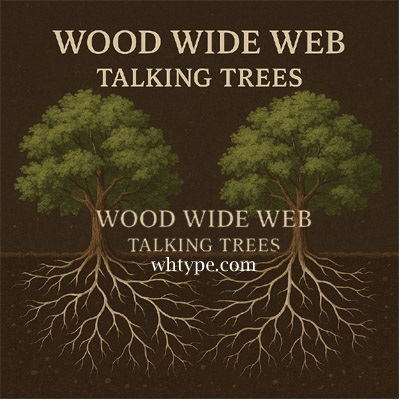
For centuries, trees have been viewed as solitary giants, silently growing in forests without interaction. But modern science reveals a different and fascinating truth: trees communicate, collaborate, and even nurture one another underground through a vast fungal network, now famously dubbed the “Wood Wide Web.”
What is the Wood Wide Web?
The “Wood Wide Web” refers to the symbiotic relationship between trees and mycorrhizal fungi—a mutualistic network beneath the soil. These fungi attach to tree roots and form mycorrhizae, fine thread-like structures called hyphae, which extend far beyond the roots. This web of hyphae connects not just individual trees, but entire forests.
How Trees Share Resources
Through this fungal network:
- Nutrient exchange occurs: Older, well-established trees often transfer carbon, nitrogen, and phosphorus to younger or weaker trees.
- Trees in the shade, which photosynthesize less, can receive carbon from trees in full sunlight.
- Parent trees (sometimes called “mother trees”) have been shown to send nutrients to their seedlings to help them survive.
Scientific Evidence:
Dr. Suzanne Simard, a forest ecologist from the University of British Columbia, has conducted groundbreaking research on how Douglas fir trees transfer carbon to neighboring paper birch trees and vice versa. Her experiments used radioactive carbon isotopes to trace the movement of carbon molecules from one tree to another through mycorrhizal connections.
📖 Source: Simard, S. W., Perry, D. A., Jones, M. D., Myrold, D. D., Durall, D. M., & Molina, R. (1997). Net transfer of carbon between ectomycorrhizal tree species in the field. Nature. https://doi.org/10.1038/41557
Warning Signals and Chemical Messages
Besides sharing nutrients, trees also warn each other of environmental threats such as:
- Insect attacks
- Drought stress
- Pathogen infections
When one tree is attacked by pests, it releases chemical signals (such as volatile organic compounds – VOCs) into the fungal network. Nearby trees, upon receiving these signals, may preemptively produce defensive chemicals (e.g., tannins) to deter herbivores.
The Role of Mycorrhizal Fungi
There are two main types of mycorrhizal fungi:
- Ectomycorrhizal fungi – surround the roots but do not penetrate them. Common in temperate forest trees like pines and oaks.
- Arbuscular mycorrhizal fungi – penetrate the root cells and are widespread among grassland and tropical tree species.
These fungi are not passive. They benefit from the sugars produced by trees through photosynthesis, creating a mutually beneficial partnership.
Key Takeaways
- Trees are not solitary—they are part of a complex, cooperative underground network.
- The Wood Wide Web enables the sharing of nutrients, water, and information.
- This network enhances forest resilience, biodiversity, and stability.
- Human activities like deforestation and soil degradation can disrupt this communication, affecting forest health.
More Scientific Reading and Sources
- Simard, S. W. (2021). Finding the Mother Tree: Discovering the Wisdom of the Forest. Knopf.
- BBC Earth: How trees secretly talk to each other
- TED Talk by Dr. Suzanne Simard – How trees talk to each other: Watch here
Conclusion:
The idea that trees communicate may sound mystical, but it’s deeply grounded in biology. Forests are intelligent networks, where cooperation often outweighs competition. Understanding this can change how we see nature and highlight the importance of protecting these vital ecosystems.
पेड़ ज़मीन के नीचे कैसे करते हैं बातचीत? – वुड वाइड वेब का विज्ञान
Read In English / हिन्दी में पढ़ें
अब तक हम पेड़ों को केवल अकेले खड़े विशाल जीव मानते आए हैं, जो चुपचाप बढ़ते रहते हैं। लेकिन आधुनिक विज्ञान ने यह रहस्य खोला है कि पेड़ आपस में संवाद करते हैं, एक-दूसरे की मदद करते हैं और यहां तक कि चेतावनी भी देते हैं — वो भी ज़मीन के नीचे!
इस संचार प्रणाली को वैज्ञानिकों ने एक खास नाम दिया है: “Wood Wide Web”, यानी जड़ों के नीचे फैला एक भूमिगत नेटवर्क, जो पेड़ों और एक विशेष प्रकार के कवक (fungus) के बीच बना होता है।
क्या है Wood Wide Web?
Wood Wide Web वह प्रणाली है जिसमें पेड़ों की जड़ों के साथ माइकोराइजल (Mycorrhizal) फंगस जुड़ते हैं। यह फंगस पेड़ों की जड़ों के साथ सहजीवी संबंध बनाते हैं और बहुत महीन तंतुओं (hyphae) की तरह ज़मीन में दूर-दूर तक फैल जाते हैं। यही तंतु विभिन्न पेड़ों की जड़ों को आपस में जोड़ते हैं और पूरे जंगल को एक नेटवर्क में बांधते हैं।
पेड़ कैसे साझा करते हैं पोषक तत्व?
इस नेटवर्क के ज़रिए:
- पेड़ कार्बन, नाइट्रोजन, और फॉस्फोरस जैसे पोषक तत्व एक-दूसरे को भेजते हैं।
- बड़े और पुराने पेड़, छोटे या कमजोर पौधों को पोषण देकर मदद करते हैं।
- कुछ मामलों में “मदर ट्री” यानी माँ जैसी भूमिका निभाने वाले पेड़ अपने बीजों (seedlings) को पोषण भेजकर उन्हें जीवित रहने में सहायता करते हैं।
वैज्ञानिक प्रमाण:
डॉ. सुज़ैन सिमार्ड (Dr. Suzanne Simard), जो यूनिवर्सिटी ऑफ ब्रिटिश कोलंबिया की वन पारिस्थितिकी वैज्ञानिक हैं, उन्होंने रेडियोधर्मी कार्बन आइसोटोप्स का उपयोग करके यह सिद्ध किया कि डग्लस फिर (Douglas fir) और पेपर बर्च (Paper birch) जैसे पेड़ आपस में कार्बन का आदान-प्रदान करते हैं।
📖 स्रोत:
Simard, S. W., et al. (1997). Nature, 388(6642), 579–582.
https://doi.org/10.1038/41557
खतरे की चेतावनी भी भेजते हैं पेड़
पोषण ही नहीं, पेड़ रासायनिक संकेतों के माध्यम से एक-दूसरे को खतरे की चेतावनी भी देते हैं, जैसे:
- कीटों का हमला
- सूखा पड़ना
- रोगजनकों (pathogens) का संक्रमण
जब एक पेड़ पर कीट हमला करते हैं, तो वह एक प्रकार के रसायन (जैसे VOCs – वाष्पशील जैविक यौगिक) छोड़ता है, जो फंगस के ज़रिए दूसरे पेड़ों तक पहुंचते हैं। इससे दूसरे पेड़ पहले से ही सुरक्षात्मक रसायन बनाकर अपनी रक्षा कर सकते हैं।
माइकोराइजल फंगस की भूमिका
मुख्यतः दो प्रकार के माइकोराइजल फंगस होते हैं:
- एक्टोमाइकोराइजल (Ectomycorrhizal) – जो जड़ों के बाहर रहते हैं और रूट सेल में प्रवेश नहीं करते (मुख्यतः शंकुधारी और पर्णपाती पेड़ों में)
- आर्बसकुलर माइकोराइजल (Arbuscular mycorrhizal) – जो रूट सेल के अंदर तक जाते हैं (ज्यादातर घास और उष्णकटिबंधीय पेड़ों में)
ये फंगस पेड़ों से शर्करा (sugar) लेकर पोषण प्राप्त करते हैं और बदले में पेड़ों की जड़ों तक पानी और खनिजों की आपूर्ति करते हैं।
मुख्य बिंदु (Key Takeaways):
- पेड़ अकेले नहीं होते, वे एक जुड़े हुए सामाजिक नेटवर्क का हिस्सा होते हैं।
- वुड वाइड वेब के ज़रिए वे संसाधन, जानकारी और चेतावनी साझा करते हैं।
- यह नेटवर्क जंगल की संतुलन, विविधता और लचीलापन बनाए रखता है।
- मानव गतिविधियाँ, जैसे जंगलों की कटाई या भूमि क्षरण, इस नेटवर्क को नुकसान पहुंचा सकती हैं।
और पढ़ने के लिए स्रोत:
- Suzanne Simard – Finding the Mother Tree (2021)
- BBC Earth लेख: पेड़ आपस में कैसे बात करते हैं
- TED Talk: How trees talk to each other – यहाँ देखें
निष्कर्ष
यह बात अब सिद्ध हो चुकी है कि पेड़ सिर्फ जीवित संरचनाएं नहीं हैं, बल्कि एक बुद्धिमान, सहयोगी पारिस्थितिक तंत्र का हिस्सा हैं। जब हम यह समझ जाते हैं कि पेड़ एक-दूसरे का ख्याल रखते हैं, तो हमारा दृष्टिकोण भी बदल जाता है — और जंगलों की रक्षा की आवश्यकता और भी स्पष्ट हो जाती है।
इस विषय मे और अधिक जानकारी प्राप्त करें





















































 WH Type
Leave a comment