
Read In English / हिन्दी में पढ़ें
Octopuses Have Three Hearts: The Science Behind Their Unique Circulatory System
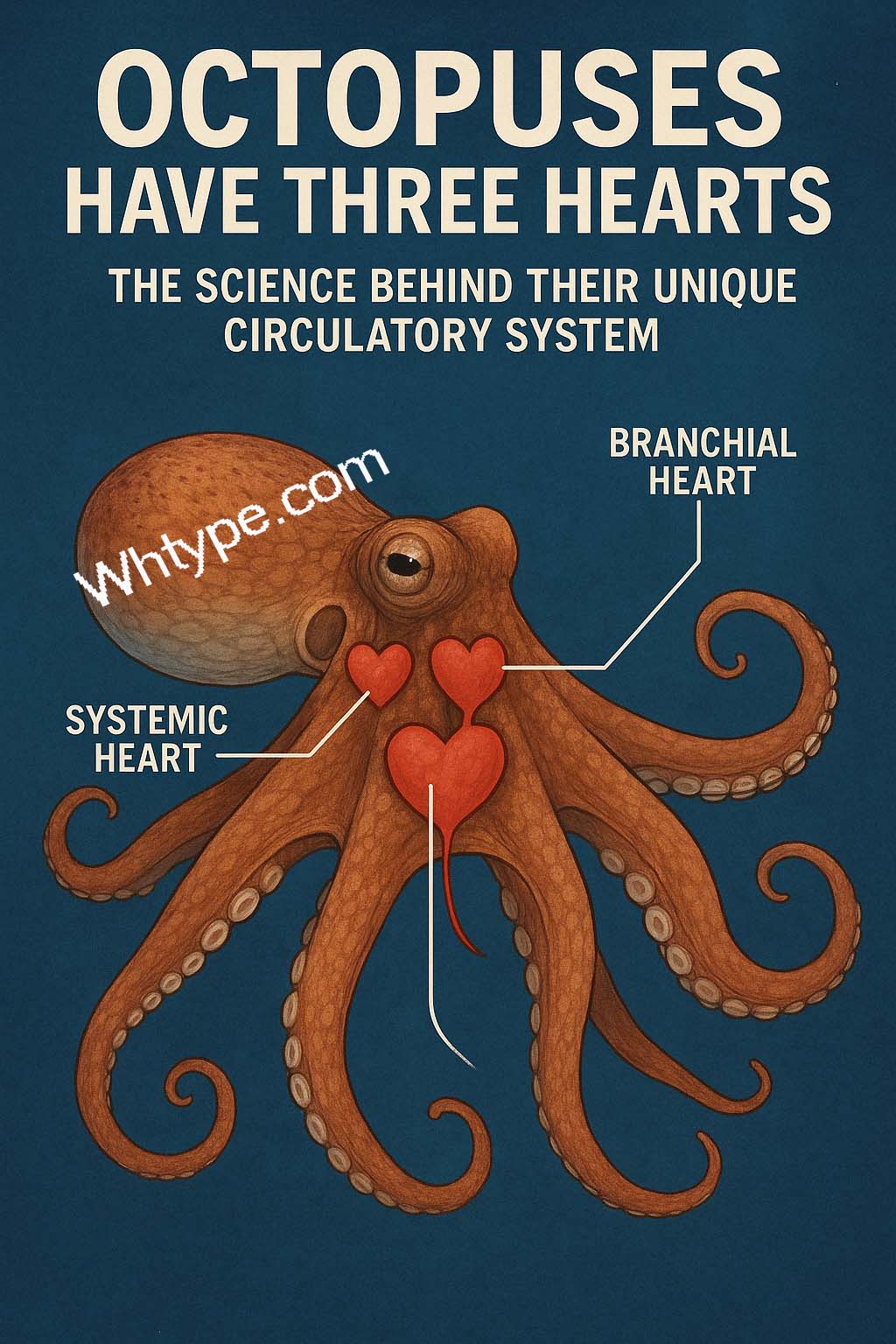
Octopuses are among the most fascinating creatures in the ocean, not only because of their intelligence and camouflage abilities but also due to their unique circulatory system. One of the most intriguing biological facts about octopuses is that they have three hearts — a feature rarely seen in the animal kingdom.
The Three-Heart System Explained
The octopus circulatory system consists of three hearts:
- Two branchial hearts:
- Each located next to a gill.
- Function: Pump deoxygenated blood to the gills where it is oxygenated.
- One systemic heart:
- Located in the center of the body.
- Function: Pumps oxygenated blood from the gills to the rest of the body.
What Happens When They Swim?
When an octopus swims, the systemic heart temporarily stops beating. This means that while swimming, the octopus is not pumping oxygen-rich blood to its body tissues as efficiently. This is one reason octopuses prefer crawling rather than swimming — swimming is energetically costly and reduces oxygen delivery.
Blue Blood and Oxygen Transport
Octopuses also have another unusual trait: their blood is blue. This is because their blood uses hemocyanin, a copper-based molecule, instead of hemoglobin (iron-based, found in humans) to transport oxygen. Hemocyanin is more efficient in cold and low-oxygen environments, making it ideal for life in deep or cold ocean waters.
However, hemocyanin is also less efficient than hemoglobin overall, so the three-heart system helps compensate by moving blood more effectively through their bodies.
Summary of Key Facts
- Octopuses have three hearts:
- Two branchial (pump blood to the gills).
- One systemic (pumps blood to the body).
- Systemic heart stops during swimming, making the activity oxygen-limiting.
- Blood is blue due to copper-based hemocyanin, adapted for oxygen transport in cold, low-oxygen marine environments.
Scientific Reference:
- Wells, M. J. (1993). “Oxygen extraction and jet propulsion in cephalopods.” Canadian Journal of Zoology, 71(8), 1710–1720.
- https://doi.org/10.1139/z93-242
Conclusion
The octopus’s three-heart system and blue blood are perfect examples of evolutionary adaptation to a marine lifestyle. These features not only allow them to thrive in diverse underwater environments but also underscore just how different and complex life under the sea can be.
ऑक्टोपस के होते हैं तीन दिल: समुद्री जीवन की एक अनोखी खोज
Read In English / हिन्दी में पढ़ें
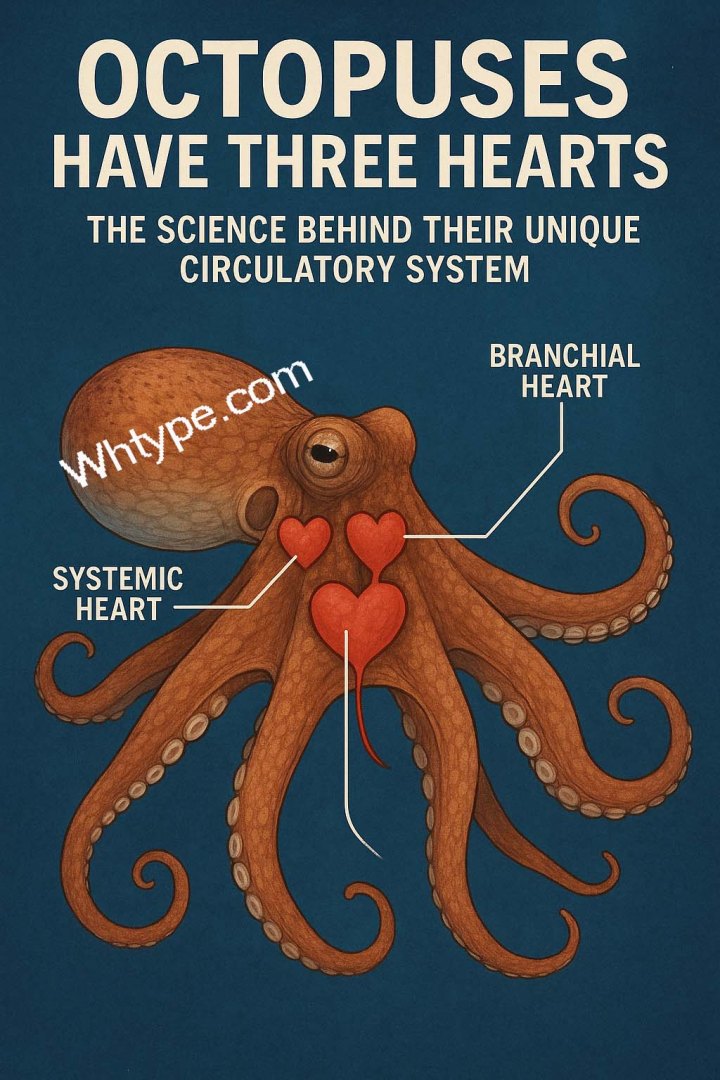
ऑक्टोपस समुद्र के सबसे रहस्यमयी और बुद्धिमान जीवों में से एक है। अपनी रंग बदलने की क्षमता और लचीलापन तो प्रसिद्ध हैं ही, लेकिन एक और रोचक और वैज्ञानिक रूप से सिद्ध बात यह है कि ऑक्टोपस के शरीर में तीन दिल होते हैं।
तीन दिल कैसे काम करते हैं?
ऑक्टोपस के तीन दिलों की प्रणाली इस प्रकार होती है:
- दो ब्रैंशियल हृदय (Branchial Hearts):
- ये दिल शरीर के दोनों ओर गिल्स (गलफड़ों) के पास होते हैं।
- कार्य: यह दिल शरीर से ऑक्सीजन रहित (deoxygenated) खून को गिल्स तक पहुंचाते हैं, जहां खून ऑक्सीजन प्राप्त करता है।
- एक सिस्टमिक हृदय (Systemic Heart):
- यह मुख्य हृदय होता है, जो शरीर के केंद्र में स्थित होता है।
- कार्य: यह गिल्स से ऑक्सीजन युक्त खून को पूरे शरीर में पंप करता है।
तैरते समय क्या होता है?
जब ऑक्टोपस तैरता है, तो सिस्टमिक हृदय (मुख्य दिल) कुछ समय के लिए धड़कना बंद कर देता है। इसका अर्थ है कि तैरने के दौरान ऑक्टोपस के शरीर में ऑक्सीजन युक्त रक्त का संचार कम हो जाता है। इसी कारण, ऑक्टोपस सामान्यतः रेंगने को प्राथमिकता देता है, क्योंकि तैरना ऊर्जा की दृष्टि से अधिक खर्चीला होता है।
नीला खून: हेमोसाइनिन (Hemocyanin) का कमाल
ऑक्टोपस का खून नीला होता है। इसका कारण यह है कि उनके खून में हीमोग्लोबिन (Hemoglobin) के बजाय हेमोसाइनिन (Hemocyanin) नामक तांबा-आधारित अणु होता है। यह अणु ठंडे और कम ऑक्सीजन वाले वातावरण में ऑक्सीजन को बेहतर तरीके से बाँधता है।
हालाँकि, हेमोसाइनिन, हीमोग्लोबिन की तुलना में कम कुशल होता है, इसलिए ऑक्टोपस को रक्त संचार में सहायता के लिए तीन हृदयों की आवश्यकता होती है।
मुख्य वैज्ञानिक तथ्य
- ऑक्टोपस के पास तीन दिल होते हैं:
- दो ब्रैंशियल हृदय: गिल्स तक रक्त पंप करने के लिए।
- एक सिस्टमिक हृदय: पूरे शरीर में रक्त पंप करने के लिए।
- तैरते समय मुख्य दिल (सिस्टमिक हृदय) धड़कना बंद कर देता है, जिससे तैरना ऑक्टोपस के लिए ऊर्जा खर्चीला हो जाता है।
- ऑक्टोपस का खून नीला होता है क्योंकि उसमें हेमोसाइनिन होता है, जो ठंडे पानी में ऑक्सीजन को वहन करने में सक्षम है।
वैज्ञानिक स्रोत:
Wells, M. J. (1993). “Oxygen extraction and jet propulsion in cephalopods.” Canadian Journal of Zoology, 71(8), 1710–1720.
https://doi.org/10.1139/z93-242
निष्कर्ष
ऑक्टोपस का तीन दिलों वाला तंत्र और नीले खून की विशेषता यह दर्शाती है कि प्रकृति ने समुद्री जीवों को विशेष परिस्थितियों के अनुसार ढालने के लिए अनोखी संरचनाएँ विकसित की हैं। यह जीव वैज्ञानिकों के लिए आज भी अध्ययन का विषय बना हुआ है।



































































 WH Type
Leave a comment