

Read In English / हिन्दी में पढ़ें
Moss Can Survive in Space: A Scientific Breakthrough
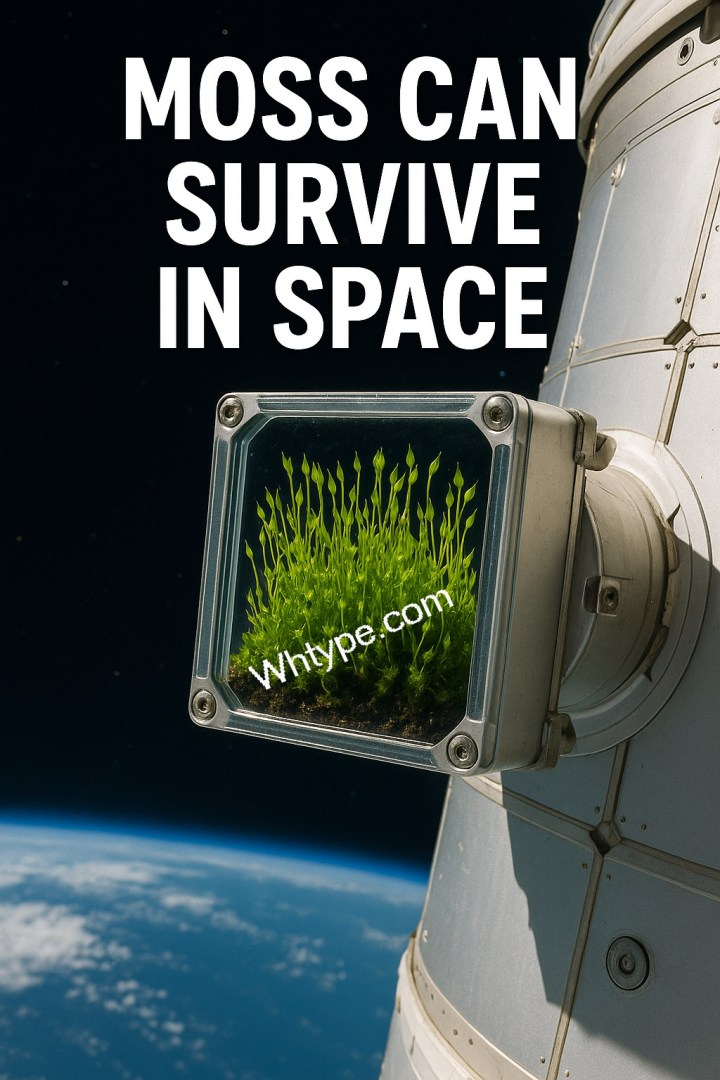
Moss, one of the simplest and smallest plants on Earth, has amazed scientists with its ability to survive in the extreme environment of outer space. From intense radiation and vacuum to freezing temperatures, certain species of moss can endure and even recover from space exposure — a discovery that opens new possibilities for astrobiology and space colonization.
What Is Moss?
Mosses (Bryophytes) are small, non-vascular plants that typically grow in moist and shaded environments. They absorb water and nutrients directly through their leaves, as they lack a complex root system. One of the most resilient species is Syntrichia caninervis, which is known for surviving in harsh climates like deserts and Antarctica.
Scientific Experiment: Moss in Outer Space
A groundbreaking study conducted by the Japan Aerospace Exploration Agency (JAXA) explored whether moss could survive in the vacuum and radiation of outer space.
Key Highlights:
- In 2016, scientists sent the moss Syntrichia caninervis to the International Space Station (ISS) and exposed it to space conditions for 1.5 years on the outside surface of the station.
- The moss faced extreme solar radiation, cosmic rays, vacuum, and temperatures below -20°C.
- When returned to Earth, the moss recovered and began growing again, showing no permanent cellular damage.
Source:
Satoh, K. et al. (2016). “The moss Syntrichia caninervis survived 1.5 years outside the International Space Station.” Scientific Reports.
https://www.nature.com/articles/srep23939
How Does Moss Survive Space?
Moss has evolved exceptional biological mechanisms that allow it to:
- Survive complete dehydration (desiccation).
- Resume metabolic activity when rehydrated.
- Repair DNA damage caused by radiation through natural repair mechanisms.
These traits allow moss to tolerate extreme stress far beyond what most plants can endure.
Implications for Space Exploration
This discovery suggests moss could play a vital role in future space missions:
- Oxygen production in closed ecosystems aboard spacecraft or space stations.
- Radiation shielding, due to its resilience against cosmic radiation.
- Sustainable life support systems in lunar or Martian habitats.
Conclusion
Moss’s ability to survive in outer space is a remarkable demonstration of biological resilience. This tiny plant may contribute significantly to the future of space colonization, offering insights into life’s ability to adapt — even beyond Earth.
अंतरिक्ष में भी जीवित रह सकता है मॉस: एक अद्भुत वैज्ञानिक खोज
Read In English / हिन्दी में पढ़ें
धरती पर मौजूद सबसे छोटे और सरल पौधों में से एक मॉस (Moss) में एक ऐसी विशेषता है जो वैज्ञानिकों को भी चौंका देती है — यह पौधा अंतरिक्ष की चरम परिस्थितियों को सहने की क्षमता रखता है। रेडिएशन, शून्य गुरुत्वाकर्षण और अत्यधिक ठंड जैसे माहौल में भी कुछ मॉस की प्रजातियाँ जीवित रह सकती हैं और दोबारा वृद्धि कर सकती हैं।
क्या है मॉस?
मॉस (Bryophytes) एक प्रकार का गैर-वहनीय (non-vascular) पौधा होता है, जो मुख्यतः नम और छायादार स्थानों पर पाया जाता है। यह जड़ों के बजाय राइजोइड्स (rhizoids) की मदद से सतह से चिपका रहता है और वातावरण से नमी अवशोषित करता है।
वैज्ञानिक प्रयोग: अंतरिक्ष में मॉस की जीवन क्षमता
जापानी वैज्ञानिकों ने अंतरिक्ष में मॉस की एक विशेष प्रजाति (Syntrichia caninervis) पर एक अनोखा प्रयोग किया। यह प्रजाति आमतौर पर सूखी और सर्द जगहों जैसे अंटार्कटिका और रेगिस्तानी क्षेत्रों में पाई जाती है।
प्रमुख प्रयोग:
- साल 2016 में जापानी अंतरिक्ष एजेंसी JAXA ने इस मॉस को अंतरिक्ष स्टेशन (ISS) की बाहरी सतह पर 1.5 साल तक रखा।
- इस दौरान मॉस को अत्यधिक सौर और कॉस्मिक रेडिएशन, वैक्यूम, और -20°C से नीचे तापमान का सामना करना पड़ा।
- जब मॉस को पृथ्वी पर वापस लाया गया, तो यह फिर से जीवित हो गया और वृद्धि करने लगा, जबकि सामान्य पौधे ऐसी परिस्थितियों में मर जाते हैं।
स्रोत:
- Satoh, K. et al. (2016). “The moss Syntrichia caninervis survived 1.5 years outside the International Space Station.” Scientific Reports.
- https://www.nature.com/articles/srep23939
कैसे कर सकता है मॉस यह कारनामा?
मॉस के पास ऐसी जैविक संरचनाएँ होती हैं जो:
- सूख जाने पर भी कोशिकाओं को नुकसान नहीं होने देतीं।
- जब फिर से नमी मिलती है तो कोशिकाएँ पुनः सक्रिय हो जाती हैं।
- इनमें DNA-repair mechanisms होते हैं जो रेडिएशन से हुए नुकसान को ठीक करने में सक्षम हैं।
अंतरिक्ष अन्वेषण में इसका उपयोग
यह खोज यह दर्शाती है कि मॉस जैसे पौधे:
- अंतरिक्ष कॉलोनीज़ में जीवन के लिए उपयोगी हो सकते हैं।
- रेडिएशन शील्डिंग या ऑक्सीजन उत्पादन में सहायक हो सकते हैं।
- मंगल ग्रह या चंद्रमा पर जीवन की संभावना के अध्ययन में मदद कर सकते हैं।
निष्कर्ष
मॉस का अंतरिक्ष में जीवित रहना यह दर्शाता है कि जीवन की सीमाएँ हमारी कल्पना से कहीं अधिक विस्तृत हो सकती हैं। यह छोटी-सी वनस्पति न केवल कठोर पर्यावरण में जीवित रह सकती है, बल्कि भविष्य के अंतरिक्ष अभियानों में महत्वपूर्ण भूमिका निभा सकती है।































































 WH Type
Leave a comment