
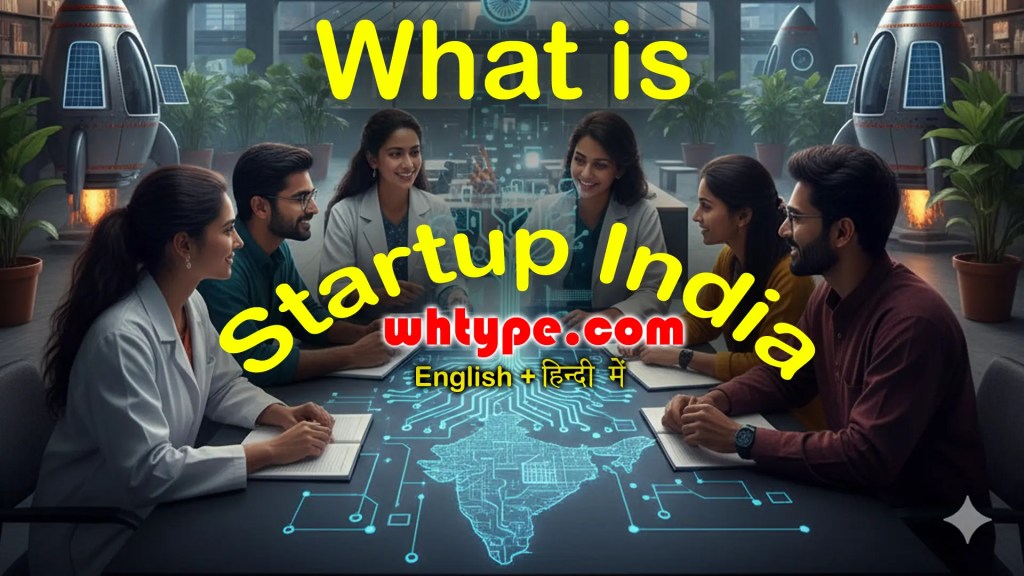
Startup India
Startup India is a flagship Government of India initiative launched to boost innovation, promote entrepreneurship and build a strong startup ecosystem—making India a global hub for new businesses, technology, entrepreneurship, and job creation. (Wikipedia)
Officially launched on 16 January 2016, Startup India is run by the Department for Promotion of Industry and Internal Trade (DPIIT) under the Ministry of Commerce and Industry. (Wikipedia)
1. What is the Startup India Initiative?
Startup India refers to a government action plan that provides benefits, support, incentives, and simplified regulations for startups in India. It aims to transform India into a nation of job creators instead of job seekers, drive innovation, and strengthen the economy. (Startup India)
Core Goals of Startup India
- Encouraging innovation and entrepreneurship
- Creating a conducive business environment
- Simplifying regulations and compliance
- Providing tax benefits and funding support
- Connecting entrepreneurs with mentors and investors
This initiative functions as a central hub or network where startups, investors, mentors, incubators, and educational institutions can access resources, programs, and collaborations. (Startup India)
2. Why Was Startup India Launched?
Startup India was launched to address key challenges faced by early-stage businesses in India:
a. Reduce Regulatory Burdens
Before Startup India, new businesses faced multiple regulatory hurdles, compliance obligations, and inspection challenges. The initiative aimed to make compliance simpler through self-certification and single-window systems. (Swipe)
b. Promote Job Creation
Startups have the potential to create jobs at scale. By supporting them, the government intended to reduce unemployment and boost economic growth.
c. Encourage Innovation
India has untapped ideas and innovations. Startup India aims to channel these into sustainable ventures by providing intellectual property support, funding, and incentives.
d. Build Competitive Global Ecosystem
India aspires to be a global startup hub (already ranking high in global startup ecosystem reports), and the initiative provides strategic infrastructure to support that vision. (Wikipedia)
3. What Is a “Startup” Under Startup India?
Not every small business qualifies as a startup. To be recognized as a startup under the Startup India policy, a company must satisfy these major criteria: (Startup India)
Eligibility Criteria
- Company Age: Must have been incorporated not more than 10 years ago.
- Company Type: Must be a Private Limited Company, LLP, or Registered Partnership Firm.
- Turnover Limit: Annual turnover must not exceed ₹100 crore in any financial year since incorporation.
- Original Entity: Must not be formed by splitting up or reconstructing an existing business.
- Innovative & Scalable: The business must be innovative, scalable or improve processes/services/products and have the potential to generate wealth and employment.
Only companies fulfilling all these criteria can obtain DPIIT recognition and avail themselves of official startup benefits. (Startup India)
4. What Are the Key Benefits of Startup India?
One of the most important aspects of Startup India is the wide range of benefits it provides to entrepreneurs. These support startups from the legal stage to growth stage.
a. Tax Benefits
- Eligible startups receive a three-year income tax exemption under Section 80-IAC of the Income Tax Act. (Swipe)
- This tax holiday allows startups to retain more capital during early years—when revenue is low and costs are high. (Swipe)
b. Self-Certification Compliance
Startups can self-certify compliance with certain labour and environmental laws. This reduces procedural inspections and regulatory costs, helping startups focus on growth. (Swipe)
c. Fast-Track Patent and IPR Support
Startups can avail of:
- 80% rebate in patent filing fees
- Fast-track examination of patent applications
- Government bears the cost of facilitators assisting in IPR application processes. (Startup India)
This support makes protecting intellectual property more affordable and faster. (cleartax)
d. Easier Public Procurement
Startups can participate in government tenders without prior experience or turnover criteria. They can also sell products on the Government e Marketplace (GeM). (Tata nexarc Blog)
e. Fund of Funds
The government has established a ₹10,000 crore Fund of Funds (FoF) managed by SIDBI (Small Industries Development Bank of India). Venture Capital Funds registered with SEBI can invest these funds into promising startups. (Swipe)
f. Credit Guarantee Support
Some benefits include access to credit guarantees, which allow startups to secure bank loans without stringent collateral requirements. (LegalWiz.in)
g. Simplified Winding-Up
Startups can wind up operations within 90 days under the Insolvency and Bankruptcy Code if needed—giving entrepreneurs the flexibility to redirect resources. (LegalWiz.in)
h. Networking & Mentorship
Startups can access:
- Startup India Hub (connects with investors, mentors, incubators)
- Incubation centres
- Workshops, competitions, and national events to showcase innovation. (Swipe)
5. How Does Startup India Help New Entrepreneurs?
Startup India offers a holistic support system including financial relief, legal and regulatory support, growth opportunities, and market access:
a. Reducing Financial Burden
Tax holidays, patent rebates, and fund access can significantly reduce initial costs. (cleartax)
b. Legal Simplification
Startups can avoid complex compliance procedures and focus on creating solutions. (Swipe)
c. Access to Capital
Government funds, incubator connections, and funding networks help startups secure early-stage capital. (Swipe)
d. Encourages Innovation
By protecting ideas via IPR support, startups can freely innovate without fear of imitation. (cleartax)
e. Global and Government Market Access
Through Startup India, startups can pitch ideas to foreign investors, participate in global events, and even procure government contracts. (Swipe)
6. How to Apply for Startup India Recognition?
The Startup India registration process is primarily online through the official Startup India portal:
Steps to Apply
- Register on Startup India Portal – Fill company details online. (Startup India)
- Apply for DPIIT Recognition – Upload required documents.
- Obtain Startup Recognition Certificate – This certificate unlocks access to benefits.
- Apply for Specific Benefits – e.g., tax exemptions, patent benefits, tender participation.
Documents Generally Required
- Company incorporation certificates (MOA/AOA)
- Board resolutions (if applicable)
- Financial statements (for tax benefits)
- Other documents as per requirement. (Startup India)
This process is designed to be user-friendly and fast, removing multiple intermediaries and reducing approval times compared to traditional business protocols.
7. What Are the Challenges of Startup India?
While Startup India has created opportunities, entrepreneurs also face practical challenges:
a. Bureaucratic Complexities
Startups sometimes find that applications take longer than expected, or portals have technical issues. (Reddit)
b. Access to Funds
Not all startups secure funding easily, especially hardware or non-tech startups. (Reddit)
c. Policy vs Reality
Some founders feel that while the policy framework is supportive on paper, implementation can be inconsistent. (Reddit)
Despite these challenges, many startups have benefited significantly via tax exemptions, patent support, procurement opportunities, and networking. (Reddit)
8. Startup India vs Other Government Startup Support Programs
India today has multiple initiatives aimed at entrepreneurship:
| Scheme | Scope | Focus |
|---|---|---|
| Startup India | Nation-wide startup ecosystem | Innovation, incentives, regulations |
| Stand-Up India | Loans to SC/ST/Women entrepreneurs | Credit access |
| Atal Innovation Mission (AIM) | School/college innovation | Innovation labs, competitions |
| MSME Schemes | Small business support | Manufacturing and services |
Each scheme complements Startup India, but Startup India is the central, flagship entrepreneurial policy of the Government.
9. What Impact Has Startup India Had?
Startup India has helped India grow a vibrant startup ecosystem:
a. Startup Growth
As of 2025, more than 180,000 startups have been recognised under Startup India across India. (The Economic Times)
b. Geographic Spread
Startups are emerging not only in metropolitan cities but also in Tier-2 and Tier-3 cities, democratizing innovation. (Wikipedia)
c. Job Creation
Millions of jobs have been created directly in the startup ecosystem. (Wikipedia)
d. Tech and Innovation Growth
India now ranks among the top global startup ecosystems, with major investments and innovations across technology, biotech, agritech, energy, and space sectors. (Wikipedia)
10. What Are Common Questions Searched About Startup India?
Here are some of the most commonly searched questions people ask about Startup India:
10.1 How Much Tax Exemption Do Startups Get Under Startup India?
Eligible startups receive a tax holiday for any three consecutive years within the first ten years of incorporation under Section 80-IAC. This means for three years your eligible business profits can be tax free. (Swipe)
10.2 What Is DPIIT Recognition?
DPIIT (Department for Promotion of Industry and Internal Trade) recognition is the official status given to startups that meet the criteria defined by the government. It acts as proof of eligibility to access Startup India benefits. (Startup India)
10.3 What Are IPR Benefits in Startup India?
Startups get:
- 80% rebate on patent filing fees
- Faster patent examination
- Government-funded facilitators to help file patents, trademarks, and designs. (LegalWiz.in)
10.4 Can All Startups Participate in Government Tenders?
Yes, recognised startups can participate in government procurement without prior experience or turnover criteria and may be exempted from EMD (Earnest Money Deposit) requirements. (Tata nexarc Blog)
10.5 What Funding Opportunities Are Available Under Startup India?
The initiative links startups to:
- Fund of Funds (₹10,000 crore)
- Angel investors
- Venture capital funds
- Incubators and accelerator programs
These help startups secure seed capital and growth funding. (Swipe)
10.6 What Are Self-Certification Benefits?
Startups can self-certify compliance for six labour and three environmental laws via online procedures, reducing inspections and compliance costs. (Swipe)
10.7 How Do You Wind Up a Startup Under Startup India?
Startups under Startup India can exit or wind up their operations within 90 days via a simplified process under the Insolvency and Bankruptcy Code. (LegalWiz.in)
11. Conclusion — Why Startup India Matters
Startup India has fundamentally reshaped India’s entrepreneurial ecosystem by providing policy frameworks, support systems, tax incentives, funding access, and regulatory simplification. It has shifted India from being a market focused on traditional employment to a vibrant, innovation-focused startup economy.
Today, India is among the top startup ecosystems worldwide with hundreds of thousands of startups, thousands of success stories, and massive job creation. Startup India continues to evolve to make entrepreneurship accessible, equitable, and impactful for the next decade and beyond. (Wikipedia)
















































 WH Type
Leave a comment