
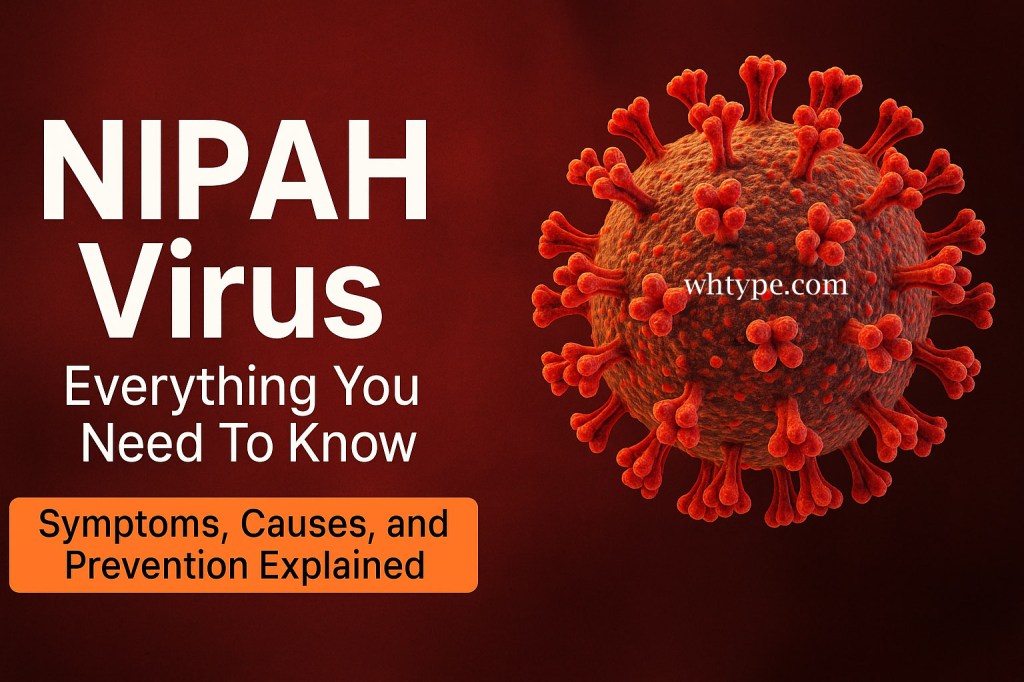
🦠 Nipah Virus Cases: What You Need to Know
Read In English // हिन्दी में पढ़ें
📌 Overview
Kerala’s health department has issued an official alert after new Nipah virus cases were reported in the state. Health authorities are on high alert, especially in districts where infections have been confirmed or suspected. With the potential for high fatality rates, it’s important for the public to stay informed, take precautions, and cooperate with health guidelines.
🔍 What is the Nipah Virus?
Nipah virus (NiV) is a zoonotic virus, meaning it can spread from animals to humans. It can also be transmitted through contaminated food or direct human-to-human contact. The virus was first identified in 1998–99 during an outbreak among pig farmers in Malaysia.
Key Facts:
- Virus Family: Paramyxoviridae
- Natural Host: Fruit bats (commonly known as flying foxes)
- Mortality Rate: 40% to 75%
- No specific vaccine or treatment available
🧬 How Does It Spread?
- From animals to humans: Mainly through fruit bats.
- Human-to-human transmission: Close contact with infected persons (saliva, urine, etc.).
- Contaminated food: Eating fruits or drinking raw date palm sap contaminated by bats.
😷 Symptoms of Nipah Virus
Symptoms usually appear within 4–14 days of exposure:
- Fever
- Headache
- Drowsiness
- Mental confusion
- Vomiting
- Breathing difficulties
- In severe cases: Encephalitis (brain swelling), coma, and even death
🛑 If you or someone shows these symptoms after visiting affected areas, seek medical help immediately.
🏥 What Steps Has Kerala Taken?
Kerala’s health department has:
- Activated rapid response teams
- Isolated suspected and confirmed patients
- Started contact tracing for those exposed
- Issued advisories to avoid certain fruits and restrict public gatherings in affected areas
- Sent samples to National Institute of Virology for confirmation
🧼 How to Protect Yourself?
✅ Avoid consuming half-eaten or fallen fruits (especially in bat-prone areas)
✅ Do not drink raw date palm sap
✅ Maintain personal hygiene – wash hands regularly
✅ Avoid close contact with infected people
✅ Use masks and gloves when dealing with patients
✅ Follow government advisories strictly
🧠 Lessons from Previous Outbreaks in Kerala
Kerala has handled Nipah outbreaks in 2018 and 2021, learning valuable lessons in containment, public communication, and early detection. The state is now using these learnings to control the current situation effectively.
📢 Final Words
The Nipah virus is dangerous, but with awareness, hygiene, and timely medical help, we can prevent its spread. Stay calm, stay informed, and follow health department instructions closely.
🔁 Share this post to spread awareness and help keep our communities safe!
📚 Sources:
- Kerala health alerts issued in Kozhikode, Malappuram & Palakkad after two suspected cases; samples sent to NIV Pune — Press Trust of India / NDTV (ndtv.com)
- Confirmed case: 38-year‑old woman from Thachanattukara, Palakkad; 26 emergency teams formed; containment zones & helplines activated (business-standard.com)
- Two confirmed cases including an 18-year‑old girl who died in Kozhikode; 345 contacts traced across three districts (english.mathrubhumi.com)
Read & Learn More







🦠 Nipah वायरस के बारे में: आपको क्या जानना चाहिए जानें पूरी जानकारी
Read In English // हिन्दी में पढ़ें
📌 सारांश (Overview)
केरल में Nipah virus के कुछ नए मामलों की पुष्टि होने के बाद, राज्य सरकार ने हाई अलर्ट जारी कर दिया है। विशेष रूप से उन जिलों में जहां मरीजों की पहचान हुई है, वहां स्वास्थ्य अधिकारी पूरी सतर्कता बरत रहे हैं। चूंकि यह वायरस उच्च मृत्यु दर वाला है, इसलिए लोगों के लिए यह जरूरी है कि वे सतर्क रहें, सही जानकारी रखें और सरकारी निर्देशों का पालन करें।
🔍 Nipah Virus क्या है?
Nipah virus (NiV) एक zoonotic virus है, यानी यह जानवरों से इंसानों में फैल सकता है। यह वायरस खाद्य पदार्थों के ज़रिये या एक व्यक्ति से दूसरे व्यक्ति तक भी फैल सकता है। इसे पहली बार 1998-99 में मलेशिया में सुअर पालकों में पहचाना गया था।
मुख्य तथ्य:
- Virus Family: Paramyxoviridae
- प्राकृतिक स्रोत (Host): Fruit Bats (Flying Foxes)
- मृत्यु दर (Mortality Rate): 40% से 75%
- कोई वैक्सीन या विशेष इलाज मौजूद नहीं है
🧬 यह वायरस कैसे फैलता है?
- जानवरों से इंसानों में: खासकर Fruit Bats से
- इंसान से इंसान: संक्रमित व्यक्ति के संपर्क में आने से
- संक्रमित खाना: गिरा हुआ या आधा खाया हुआ फल, खासकर खजूर का रस
😷 Nipah Virus के लक्षण
लक्षण आमतौर पर 4 से 14 दिनों के भीतर दिखने लगते हैं:
- बुखार
- सिरदर्द
- कमजोरी या नींद महसूस होना
- मानसिक भ्रम (confusion)
- उल्टी
- सांस लेने में परेशानी
- गंभीर मामलों में: दिमाग की सूजन (Encephalitis), कोमा, और मृत्यु
🛑 अगर हाल ही में प्रभावित क्षेत्र में यात्रा की हो और ऊपर के लक्षण दिखें, तो तुरंत डॉक्टर से संपर्क करें।
🏥 केरल सरकार ने क्या कदम उठाए हैं?
- Rapid Response Teams को सक्रिय किया गया है
- संदिग्ध और संक्रमित मरीजों को आइसोलेट किया गया है
- Contact Tracing शुरू कर दी गई है
- जनता को फलों से बचने और भीड़भाड़ से दूरी बनाने की सलाह
- टेस्टिंग के लिए सैंपल National Institute of Virology भेजे जा रहे हैं
🧼 बचाव के उपाय
✅ गिरे हुए या आधे खाए फलों को न खाएं
✅ कच्चा खजूर का रस न पीएं
✅ नियमित रूप से हाथ धोएं
✅ संक्रमित व्यक्ति से दूरी बनाएं
✅ मरीजों की देखभाल करते समय मास्क और ग्लव्स पहनें
✅ सरकारी निर्देशों का पालन करें
🧠 पिछली बार के अनुभव से क्या सीखा गया?
केरल ने 2018 और 2021 में भी Nipah outbreak का सामना किया था। उन अनुभवों से स्वास्थ्य विभाग को समय पर नियंत्रण, जागरूकता और बेहतर व्यवस्था बनाने में मदद मिल रही है।
📢 निष्कर्ष (Conclusion)
Nipah virus खतरनाक जरूर है, लेकिन यदि हम समय पर सावधानी बरतें, जानकारी रखें और सरकार की सलाह मानें, तो इसके फैलाव को रोका जा सकता है।
🔁 इस जानकारी को साझा करें ताकि और लोग भी सतर्क रहें और सुरक्षित रहें।
📚 स्रोत:
- Kerala health alerts issued in Kozhikode, Malappuram & Palakkad after two suspected cases; samples sent to NIV Pune — Press Trust of India / NDTV (ndtv.com)
- Confirmed case: 38-year‑old woman from Thachanattukara, Palakkad; 26 emergency teams formed; containment zones & helplines activated (business-standard.com)
- Two confirmed cases including an 18-year‑old girl who died in Kozhikode; 345 contacts traced across three districts (english.mathrubhumi.com)
Read & Learn More


























































 WH Type
Leave a comment