
Introduction
The debate of Marriage vs Live-in Relationship has become more common in modern society. While marriage is a traditional bond recognized legally and socially, a live-in relationship offers freedom and flexibility without legal obligations. In this blog, we will explore the differences, advantages, disadvantages, legal aspects, and societal perceptions of both.
What is Marriage?
Marriage is a legally and socially recognized union between two people, creating rights and obligations related to family, property, and society. It is deeply rooted in cultural, religious, and legal traditions.
Key Features of Marriage:
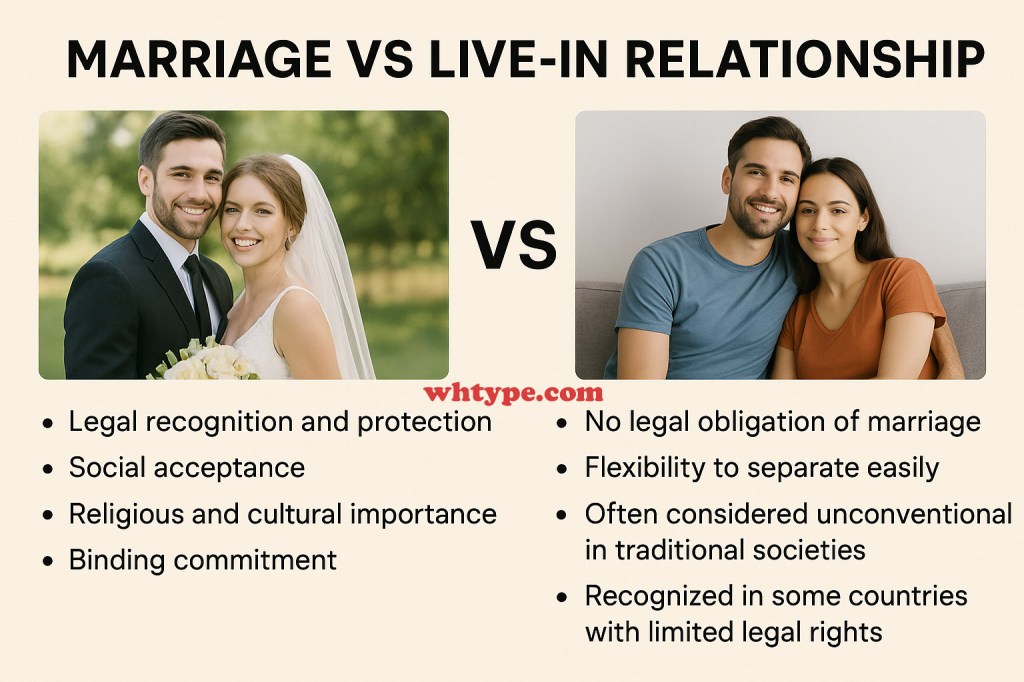
- Legal recognition and protection
- Social acceptance
- Religious and cultural importance
- Binding commitment
What is a Live-in Relationship?
A live-in relationship means two individuals living together in a long-term relationship without being married. It is based on mutual consent, companionship, and freedom.
Key Features of Live-in Relationship:
- No legal obligation of marriage
- Flexibility to separate easily
- Often considered unconventional in traditional societies
- Recognized in some countries with limited legal rights
Marriage vs Live-in Relationship: Key Differences
| Aspect | Marriage | Live-in Relationship |
|---|---|---|
| Legal Status | Legally recognized and protected | Not always legally binding (depends on country/state) |
| Commitment | Lifelong commitment with responsibilities | Flexible, based on mutual agreement |
| Social Acceptance | Highly accepted and respected | Often judged or questioned in conservative societies |
| Separation | Requires divorce procedure | Easy to end by mutual consent |
| Financial Security | Legal rights over property, inheritance, alimony | Limited or no rights unless legally documented |
| Children | Children born in marriage are fully protected legally | Legal rights for children vary by country |
Advantages of Marriage
- Strong legal protection
- Financial security for partners and children
- Social respect and recognition
- Emotional stability and family support
Disadvantages of Marriage
- Complex divorce procedures
- Legal and financial responsibilities
- Sometimes leads to social or family pressure
- Lack of personal freedom compared to live-in
Advantages of Live-in Relationship
- Freedom to leave without legal complications
- More time to understand compatibility
- Flexibility and independence
- No societal pressure of rituals or traditions
Disadvantages of Live-in Relationship
- Lack of legal recognition in many countries
- Social stigma in conservative societies
- No automatic rights to inheritance or property
- Insecurity about long-term commitment
Legal Status: Marriage vs Live-in Relationship
- Marriage: Fully recognized under personal, civil, and family laws. Provides rights related to divorce, inheritance, child custody, and property.
- Live-in Relationship: In countries like the USA and India, certain laws grant limited protection (like domestic violence laws, maintenance in some cases, and child rights), but it is not equivalent to marriage.
Society’s Perspective on Marriage vs Live-in
- In traditional societies, marriage is respected while live-in relationships face criticism.
- In urban and modern societies, live-in relationships are more accepted as an alternative lifestyle.
Which is Better: Marriage or Live-in Relationship?
It depends on individual choices, cultural background, and personal beliefs.
- Choose Marriage if you prefer stability, family support, and legal protection.
- Choose Live-in Relationship if you value freedom, independence, and want to test compatibility before marriage.
Also Read : How to Get Married in USA – Complete State-by-State & City Guide
FAQs on Marriage vs Live-in Relationship
Q1. Is live-in relationship legal in India?
Yes, live-in relationships are not illegal, and courts have recognized them under certain circumstances, especially for the protection of women and children.
Q2. Can live-in partners claim property rights?
Generally no, unless mentioned in a legal agreement. Married spouses automatically get rights.
Q3. Which is better for children – marriage or live-in?
Marriage provides full legal rights to children, whereas live-in relationships may lead to legal complications depending on the country.
Q4. Why do people choose live-in relationships?
For freedom, independence, avoiding legal obligations, and testing compatibility before marriage.
Conclusion
The choice between Marriage vs Live-in Relationship depends on personal preferences and cultural context. Marriage offers security, stability, and legal rights, while a live-in relationship provides freedom, flexibility, and modern companionship. Both have pros and cons, and the right choice depends on what you value more in a relationship.
More For You :
- “Advantages of Staying Single – Why Being Single Can Be the Best Choice
- Side Effects of Marriage: Why You Should Not Marry?
- How to Get Married in USA – Complete State-by-State & City Guide
- Top Reasons People Regret Marriage
Explore More on WHTYPE Blog :
























Something went wrong. Please refresh the page and/or try again.





















































 WH Type
Leave a reply to Side Effects of Marriage: Why You Should Not Marry? – WH Type Cancel reply