

Embrace Simplicity in Business: Start Small with a Prototype First
In today’s competitive business world, entrepreneurs often feel pressured to create detailed plans, complex strategies, and heavy structures before even launching. However, the most successful businesses often begin with simplicity. Starting with a clear, focused idea and testing it early through a simple prototype not only reduces risk but also gives you clarity on what works.
If you are wondering how to embrace simplicity in business, this guide will walk you through the power of simple ideas, why prototypes matter, and how you can apply this strategy for long-term success.
What Does “Embrace Simplicity” Mean in Business?
Embracing simplicity means cutting through unnecessary complexity and focusing only on what truly matters. Instead of creating a 100-page business plan, you start with a clear idea, a basic model, and then improve over time.
- ✅ Simplicity makes execution faster.
- ✅ Customers understand your value easily.
- ✅ It saves time, money, and energy.
Step 1: Focus on a Simple Idea
The foundation of every great business is a clear, simple idea. Think of companies like Uber, Airbnb, or WhatsApp — they all started by solving one core problem.
👉 Instead of asking “How can I do everything?”, ask “What is the single most important problem I can solve?”
Benefits of focusing on a simple idea:
- Clarity: You know exactly what you are building.
- Communication: Customers easily understand your offer.
- Execution: Your team works with a clear direction.
- Scalability: Once your idea works, you can expand.
Example: Instead of launching a full restaurant, start with one signature dish that people love. Once you prove demand, you can expand the menu.
Step 2: Prototype First
Once you have your simple idea, the next step is to test it in the real world. This is where creating a prototype comes in.
A prototype doesn’t have to be expensive or perfect. It can be a basic product version, a sample service, or even a demo. The goal is to test customer response before investing heavily.
Why is prototyping important?
- Saves Money: Avoid wasting resources on unwanted features.
- Validates Demand: See if customers are really interested.
- Collects Feedback: Improve based on real user insights.
- Builds Confidence: Gives you proof before scaling.
Example: If you want to build a mobile app, don’t spend a year coding. Instead, create a clickable mockup or a beta version to test with real users.
How Simplicity + Prototyping Work Together
When you combine a simple idea with a prototype-first approach, you create a lean business model. This method allows you to:
- Test fast
- Learn quickly
- Adjust without heavy loss
- Grow steadily
This is exactly how startups and successful entrepreneurs reduce risks while maximizing opportunities.
Key Takeaways
- Start with one simple business idea instead of a complex plan.
- Build a prototype first to test the market.
- Collect customer feedback early.
- Simplify your execution and expand later.
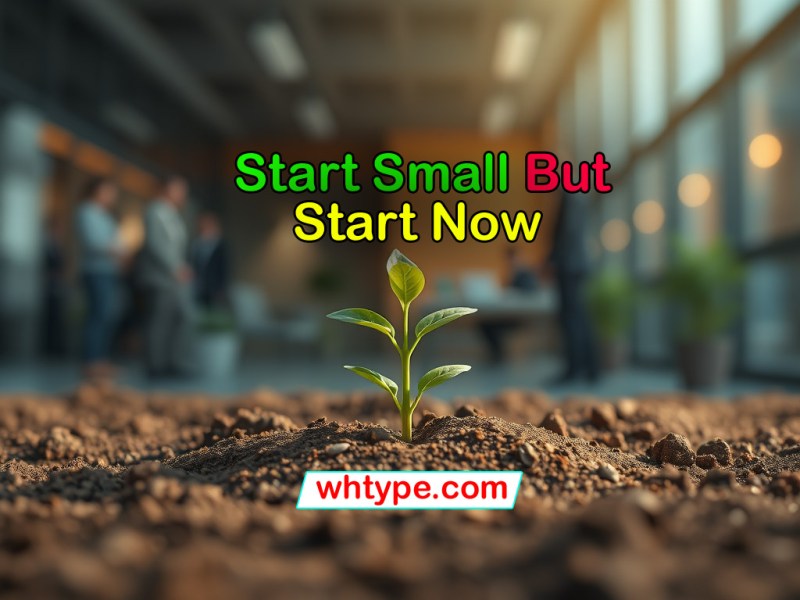
- Remember: Start small, but start now.
Conclusion
In business, complexity can slow you down, but simplicity drives clarity and action. By focusing on a simple idea and building a prototype first, you set yourself up for success with minimal risks.
Whether you’re starting a new business, launching a startup, or trying out a side hustle, remember that the best approach is often the simplest one.
👉 Embrace simplicity, start small, test fast — and grow big.
























































 WH Type
Leave a comment