
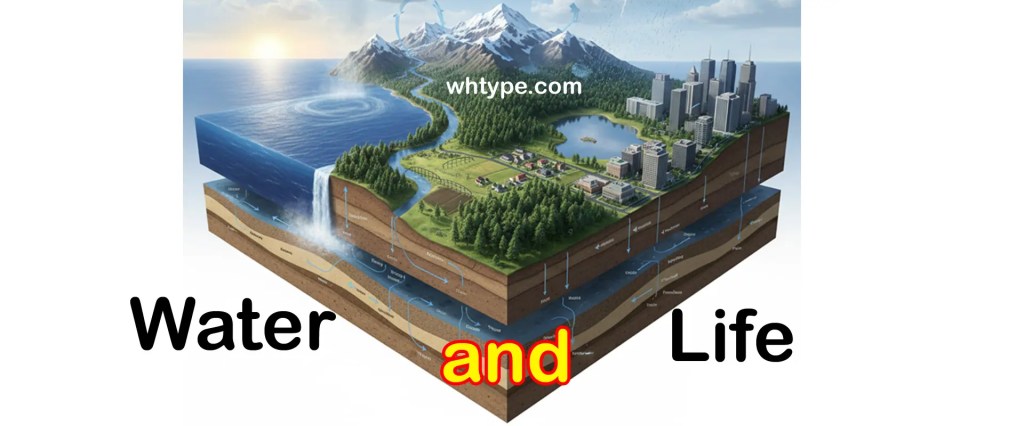
Water is the most important element for life on Earth. From human survival to plant growth, climate balance, oceans, and even the overall existence of life — everything depends on water.
This post covers what water is, its history, importance, presence across Earth and the universe, types of water, scientific explanations, pollution, conservation, and slogans.
1. What Is Water?
- Water is a chemical compound made of two hydrogen atoms and one oxygen atom (H₂O).
- It exists in three states: solid (ice), liquid (water), and gas (water vapor).
- It is known as a universal solvent because it can dissolve more substances than any other liquid.
- Pure water is colorless, tasteless, and odorless.
- Water covers 71% of Earth’s surface.

2. History of Water (Origin of Water on Earth)
Scientists believe water appeared due to:
- Volcanic eruptions
- Early Earth released steam and gases through volcanoes.
- Steam cooled → formed clouds → rainfall created oceans.
- Comets and asteroids
- Many icy comets collided with Earth in the early solar system.
- These contributed huge amounts of water.
- Chemical reactions in Earth’s crust
- Hydrogen and oxygen reacted deep inside Earth forming water.
Result: Oceans formed around 4.4 billion years ago, making Earth habitable.
3. Why Water Is Important for Human Beings
Water helps the body in many ways:
- Carries nutrients and oxygen to cells.
- Aids digestion and metabolism.
- Regulates body temperature.
- Lubricates joints.
- Removes toxins through urine and sweat.
- Maintains skin health.
- Supports brain function (brain is 73% water).
Without water, a person can survive only 3–7 days.

4. Why Water Is So Important for Life
Life cannot exist without water because:
- All living cells contain water.
- Water allows biochemical reactions to occur.
- Plants need water for photosynthesis.
- Animals depend on water for hydration and food chains.
- Water helps maintain climate, rainfall, and seasons.
- It enables reproduction in many species (e.g., fishes, amphibians).
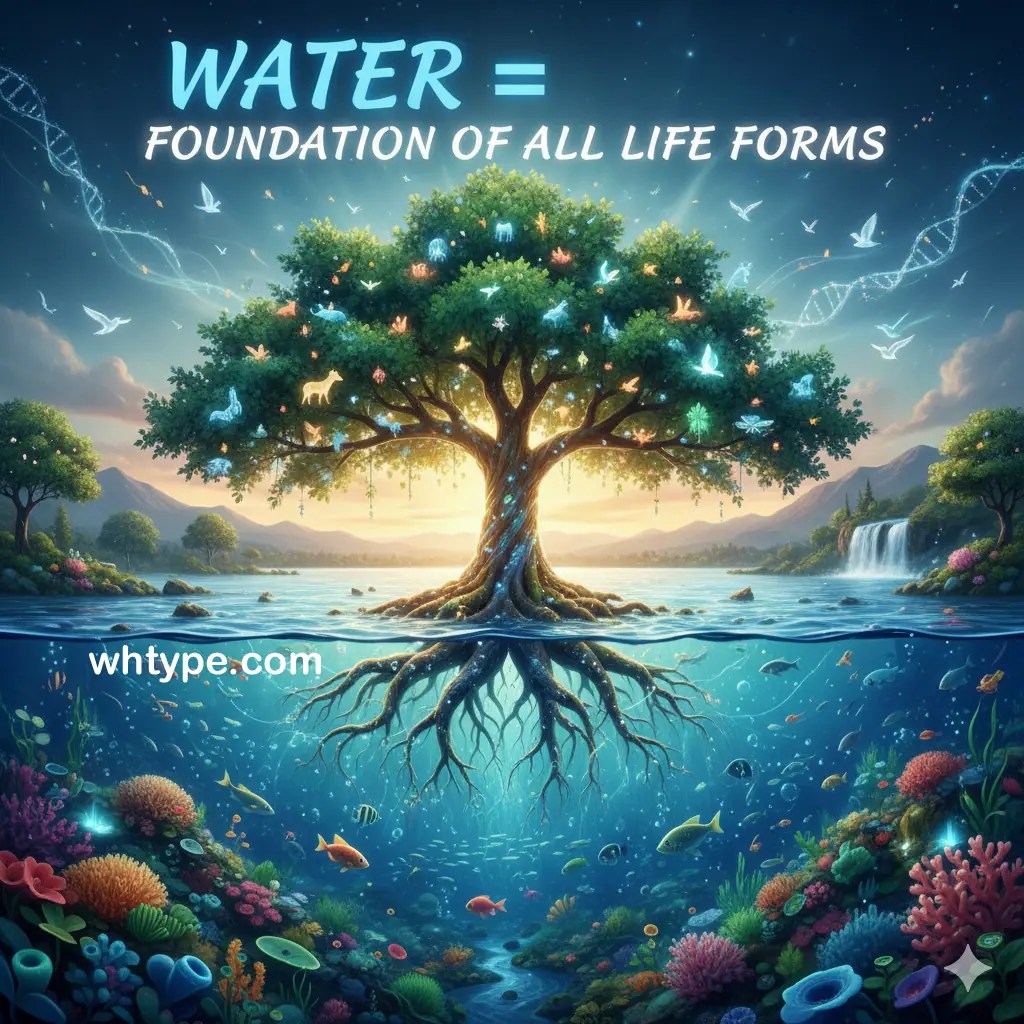
Water = Foundation of all life forms.
5. Why Earth Has Water?
Earth is the only known planet with abundant liquid water because:
- Earth’s distance from the Sun keeps temperature moderate.
- Earth has a protective atmosphere.
- Earth’s gravity retains water vapor.
- The presence of oceans, rivers, and clouds keeps the water cycle running.
- Magnetic field protects water from solar radiation.
This combination makes Earth a “Goldilocks Planet” — perfect for water.
6. Water in the Universe
- Water exists as ice on many planets and moons.
- Mars: Ice caps at poles.
- Europa (moon of Jupiter): Has a massive liquid water ocean under its ice surface.
- Enceladus (moon of Saturn): Geysers eject water vapor.
- Water vapor clouds have also been found around distant stars.
Scientists search for water because where water exists, life may exist.

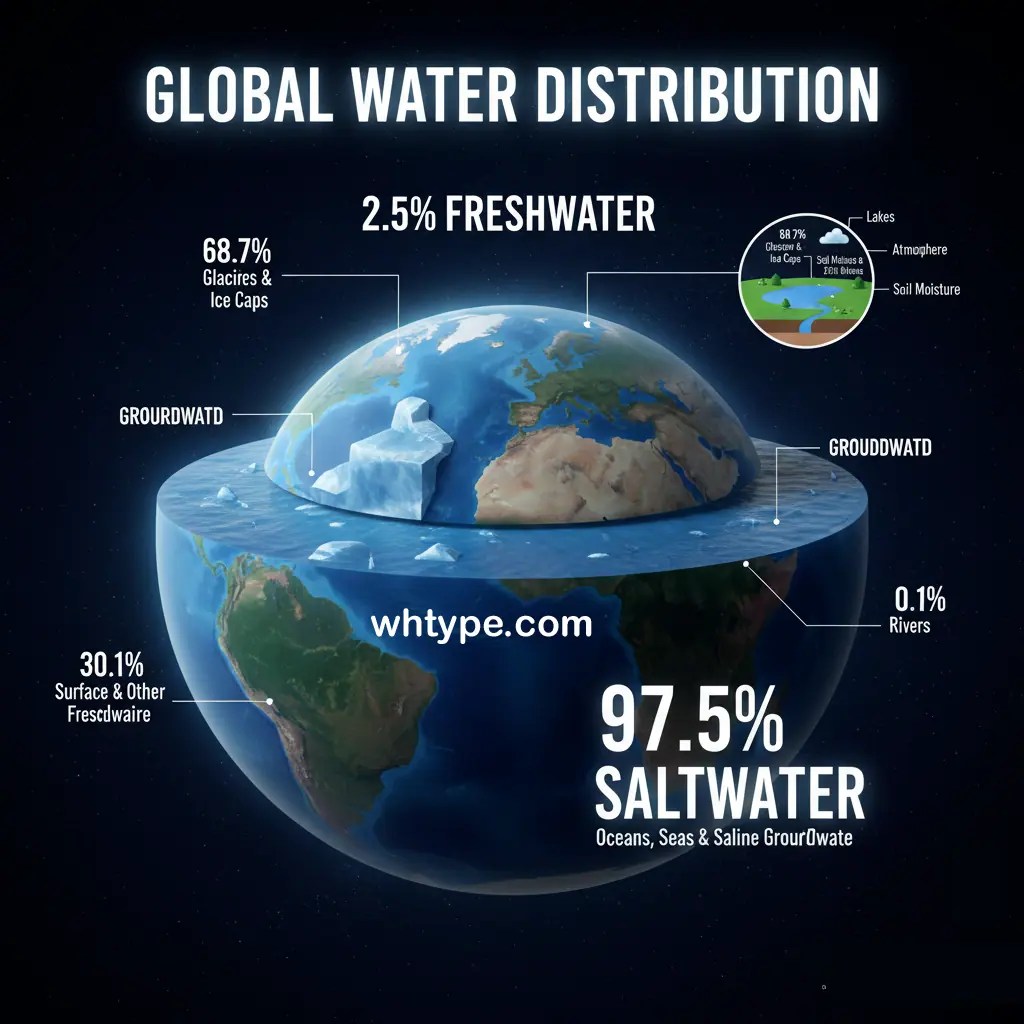
7. Ratio of Water in Earth
- 71% of Earth’s surface is water.
- 97% is saltwater (oceans).
- Only 3% is freshwater, and less than 1% is drinkable.
8. Ratio of Water in Human Body
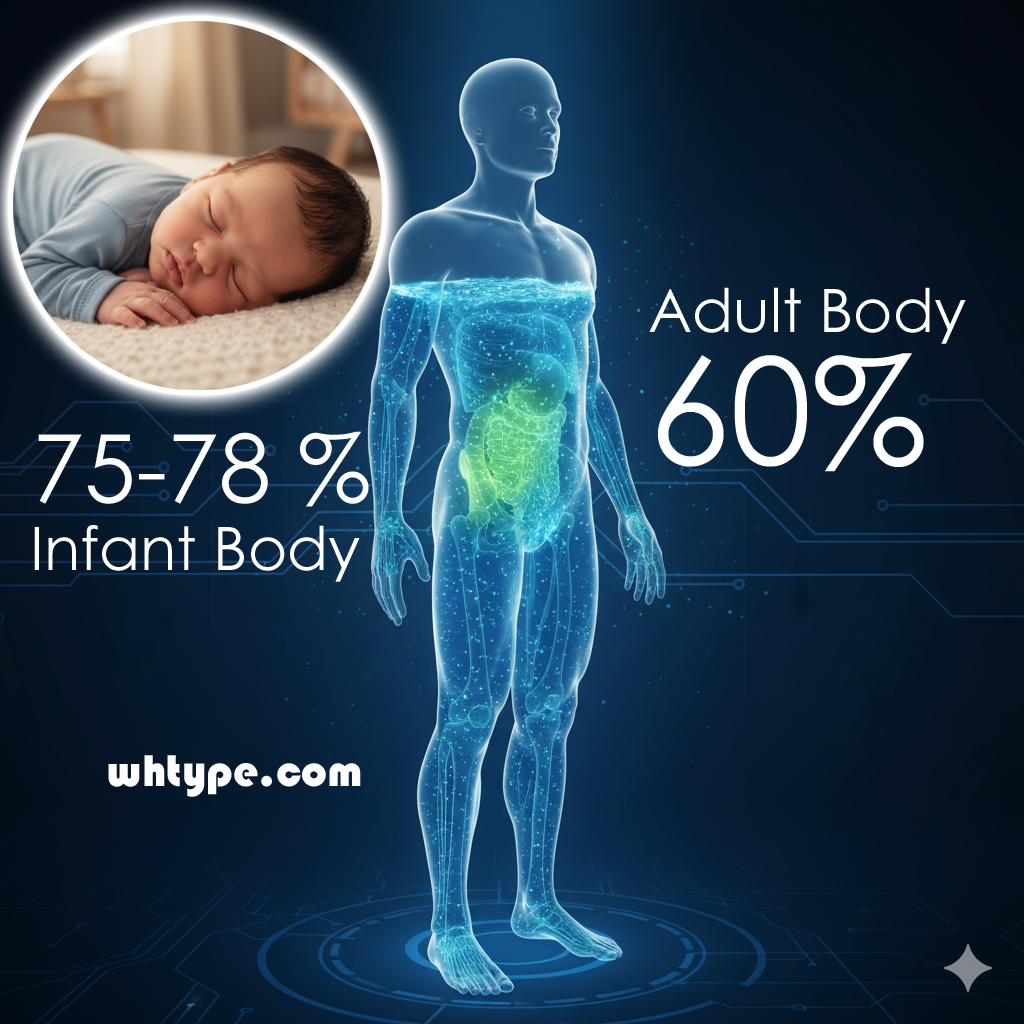
- Adult body: 60% water
- Infant : 75-78 %
- Brain: 73%
- Heart: 73%
- Lungs: 83%
- Skin: 64%
- Muscles & kidneys: 79%
- Bones: 31%
9. Ratio of Water in Important Plants
| Plant / Part | Water Content |
|---|---|
| Watermelon | 92% |
| Cucumber | 95% |
| Lettuce | 96% |
| Tomato | 94% |
| Spinach | 91% |
| Coconut Water | 95% |
| Potato | 80% |
| Mango | 83% |
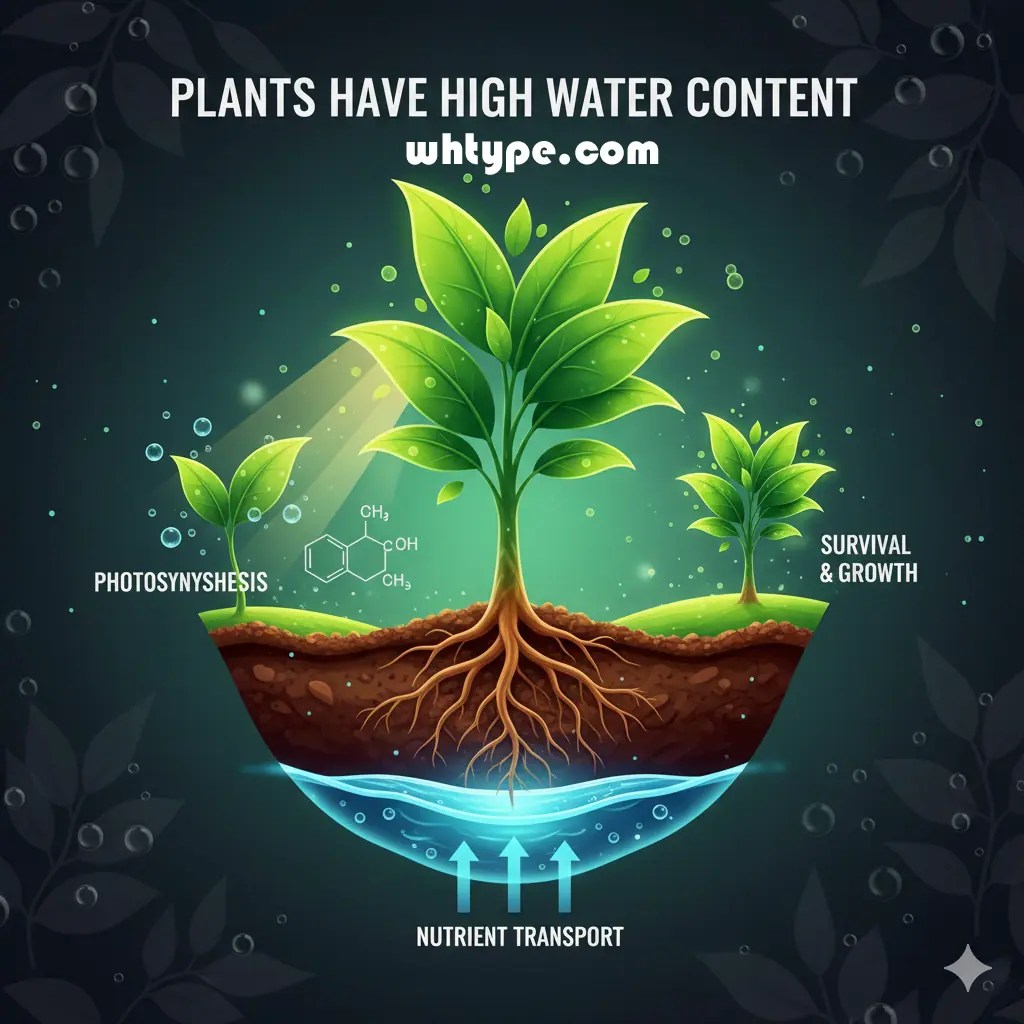
Plants have high water content because it supports photosynthesis, nutrient transport, and survival.
10. Types of Water (Scientific Explanation)
Below are the main types of water found on Earth:
A. Natural Types of Water
1. Freshwater
- Contains very low salt (less than 0.05%).
- Found in rivers, lakes, glaciers, and ponds.
- Drinkable after purification.
2. Saltwater
- Contains high salt (around 3.5%).
- Found in oceans and seas.
- Not drinkable without desalination.
3. Groundwater
- Water stored beneath the Earth’s surface.
- Found in aquifers and underground layers.
- Used in borewells, handpumps, and wells.
4. Surface Water
- Water present on Earth’s surface.
- Examples: Rivers, lakes, wetlands, reservoirs.
5. Glacial Water (Ice Water)
- Water stored in glaciers, snow, and ice caps.
- Contains freshwater in frozen form.
- Melting glaciers contribute to rivers.
6. Rainwater
- Purest form of natural water.
- Formed when water vapor condenses into droplets.
7. Atmospheric Water
- Water vapor present in the air.
- Forms clouds, humidity, and fog.
8. Spring Water
- Naturally filtered groundwater that reaches the surface.
- Rich in minerals.
B. Types of Water by Purification
9. Distilled Water
- Pure water obtained by boiling and condensing steam.
- Contains no minerals.
- Used in laboratories and batteries.
10. RO Water (Reverse Osmosis Water)
- Water purified using membranes to remove impurities.
- Common in households.
11. Mineral Water
- Water enriched with natural or added minerals like calcium, magnesium, potassium.
12. Filtered Water
- Water passed through filters to remove particles and impurities.
- Used in daily drinking water.
C. Other Scientific Types
13. Hard Water
- Contains high minerals (calcium & magnesium).
- Difficult to create foam.
- Found in many borewells.
14. Soft Water
- Contains low mineral content.
- Easily forms lather with soap.
15. Wastewater
- Water contaminated by homes, industries, and agriculture.
- Needs treatment before reuse.
16. Greywater
- Lightly used water from bathroom, sink, washing machine.
- Can be recycled for gardening.
17. Blackwater
- Highly contaminated water containing human waste (toilets).
- Requires advanced treatment.
18. Brackish Water
- A mixture of freshwater and saltwater.
- Found in estuaries and mangroves.
11. How We Are Polluting Water?
Humans pollute water through:
- Dumping industrial waste into rivers.
- Plastic pollution in oceans.
- Throwing chemicals, oils, and detergents into water bodies.
- Using pesticides in farming that enter groundwater.
- Untreated sewage disposal.
- Sand mining near rivers.
- Household waste disposal.
- Overuse of groundwater causing depletion and contamination.
12. How to Save Water for Present and Future
Individuals Can:
- Turn off tap while brushing.
- Repair leaking pipes.
- Use water-saving taps and buckets instead of showers.
- Collect rainwater (rainwater harvesting).
- Reuse RO wastewater for plants.
- Water plants in early morning.
- Use efficient appliances (washing machine, dishwasher).
Communities & Governments Should:
- Build rainwater harvesting systems for buildings.
- Treat sewage before releasing it.
- Prevent industrial waste dumping.
- Restore rivers, lakes, and wetlands.
- Promote drip irrigation in farming.
- Create awareness programs.
13. Popular Slogans Related to Water
- “Save Water, Save Life.”
- “Pani Bachao, Kal Bachao.”
- “Every Drop Counts.”
- “No Water, No Life.”
- “Jal Hai To Kal Hai.”
- “Don’t Waste Water — It’s Precious.”
- “Be the Solution to Water Pollution.”
- “A Drop of Water is Worth More Than a Sack of Gold to a Thirsty Man.”
Related Post


















Something went wrong. Please refresh the page and/or try again.
























































 WH Type
Leave a comment