

Investing in the stock market is one of the most popular ways to grow money in India today. Crores of investors—students, working professionals, businessmen, and even retirees—actively trade or invest in stocks, mutual funds, and other financial instruments. But there is one major link between the investor and the stock market: the stock broker.
Without a stock broker, you cannot buy or sell shares, no matter how much money you have or how much market knowledge you possess.
This complete guide explains what a stock broker is, their meaning, types, roles, how they work, their importance, charges, regulations, and all essential information you must know before choosing a broker in India.
1. What is a Stock Broker? (Meaning)
A stock broker is a SEBI-registered financial intermediary who provides investors access to the stock market.
In simple words:
👉 A stock broker is a company or individual who helps you buy and sell shares, mutual funds, bonds, derivatives, etc., in the stock market.
You cannot directly go to NSE or BSE and buy shares.
Only registered brokers are allowed to place orders on exchanges.
When you open a Demat + Trading Account with a broker, you get the facility to invest in:
- Equity (stocks)
- Mutual funds
- IPOs
- F&O (Futures & Options)
- Currency
- Commodities
- Bonds
- ETFs
- Government securities
Thus, a stock broker is like a bridge between you and the stock market.
2. Why Do We Need Stock Brokers? (Importance)
You might wonder:
Why can’t investors directly trade in NSE or BSE? Why do we need a broker?
Here are the reasons:
1. Exchanges do not allow direct public trading
Only SEBI-registered members can participate directly.
Stock exchanges want strict control, transparency, and accountability.
2. Brokers provide trading platforms
They give you apps and websites to place orders easily.
Without these platforms, you cannot practically trade.
3. They handle settlements
Whenever you buy or sell shares, hundreds of backend processes happen:
- Order routing
- Trade matching
- Clearing
- Settlement
- Depository updates
Brokers manage all these.
4. They provide research & tools
Brokers give:
- Stock screeners
- Charting tools
- Technical indicators
- Market research
- Price alerts
These help investors make better decisions.
5. They ensure compliance
KYC, account opening, regulations, taxation—all are handled by brokers.
So, a stock broker is necessary, not optional.
3. Types of Stock Brokers in India
Stock brokers can be categorized in multiple ways. The two most common classifications are:
A. Based on Services
1. Full-Service Brokers
These brokers offer a complete range of financial services:
✔ Stock trading
✔ Research reports
✔ Investment advice
✔ Relationship manager
✔ Retirement planning
✔ Insurance
✔ Wealth management
Examples:
- ICICI Direct
- HDFC Securities
- Kotak Securities
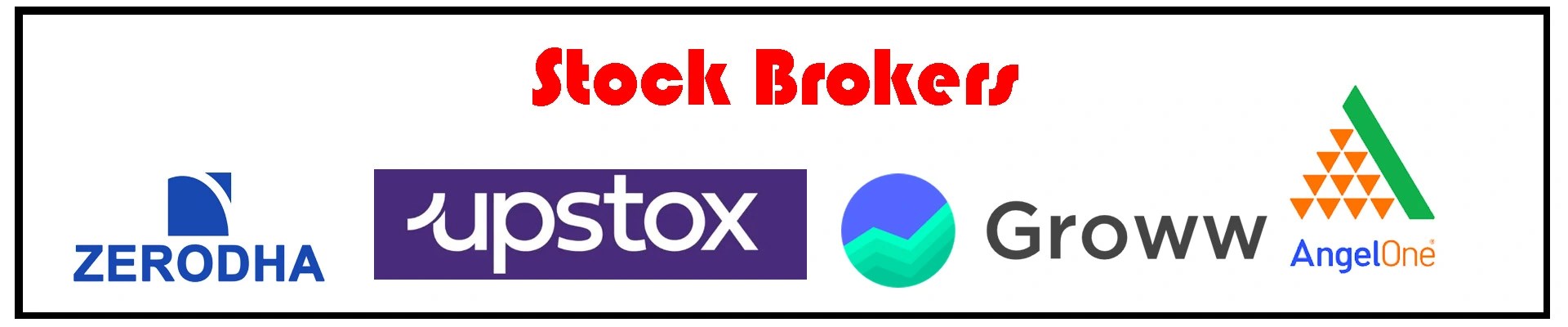
- Angel One (semi full-service today)
- Sharekhan
Who should choose?
Investors who need guidance and advisory.
Cons:
Higher brokerage charges.
2. Discount Brokers
These brokers offer only trading platforms—no advisory, no personal guidance.
But they charge far lower fees.
Examples:
- Zerodha
- Upstox
- Groww (new-age broker)
- Fyers
- 5Paisa
Who should choose?
Experienced traders or cost-conscious investors.
Pros:
Low brokerage, modern apps, good tools.
B. Based on Ownership
1. Bank-Based Brokers
Owned by banks, like:
- ICICI Direct
- HDFC Securities
- SBI Securities
- Kotak Securities
Advantages:
- Trust
- Easy fund transfer
- Strong compliance
Disadvantages:
- High brokerage charges
2. Independent Brokers
Non-bank private companies.
Examples:
- Zerodha
- Upstox
- Groww
- Angel One
Advantages:
- Low pricing
- Fast technology
- Powerful platforms
Disadvantages:
- No physical bank branches
4. How Does a Stock Broker Work? (Full Working Explained)
A stock broker connects investors to the stock exchange. Here’s the step-by-step process of how brokers work.
Step 1: Account Opening
You register with a broker and open:
- Trading Account (to buy/sell)
- Demat Account (to hold shares)
KYC documents required:
- PAN
- Aadhaar
- Photo
- Bank account
- Signature
SEBI regulations make KYC mandatory.
Step 2: Depositing Money
To trade, you need to add money to your trading account through:
- UPI
- Net banking
- NEFT/RTGS
This balance is called trading balance or funds available.
Step 3: Placing an Order
When you click “Buy” or “Sell” on your broker’s app, the broker:
- Routes your order to the stock exchange
- Matches it with a counterparty
- Confirms execution
This happens in milliseconds.
Step 4: Clearing and Settlement
After a trade:
- NSE/BSE confirm the trade
- Clearing Corporation (like NSCCL) processes it
- Depository (NSDL/CDSL) transfers shares to/from your Demat
For equity, settlement cycle is T+1 (trade day + 1 day).
Step 5: Ledger and Statements
Your broker manages:
- Contract notes
- Trade reports
- P&L statements
- Tax statements
- Holdings report
They ensure full transparency.
Step 6: Compliance and Reporting
Brokers must follow SEBI regulations including:
- Safety of investor funds
- Daily margin reporting
- Risk management
- Data security
SEBI audits them regularly.
5. Roles and Responsibilities of Stock Brokers
A stock broker has multiple important roles:
1. Providing Trading Platforms
They offer:
- Mobile apps
- Desktop platforms
- Browser platforms
These let you:
- Buy/sell stocks
- Analyze charts
- Set alerts
- Track investments
2. Maintaining Demat Accounts
Your shares remain in the Demat account maintained through NSDL or CDSL.
3. Executing Trades
Brokers execute your buy or sell orders with accuracy and speed.
4. Providing Margin/Leverage
Some brokers provide margin:
- Intraday trading
- Pledging of shares
- Margin against securities
5. Research & Advisory (For Full-Service Brokers)
They publish:
- Daily reports
- Market outlook
- Stock recommendations
6. Investor Protection
They must:
- Keep client funds separate
- Follow SEBI rules
- Return funds/shares on time
7. Handling Customer Support
Brokers provide:
- Helpline
- Chat support
- Email assistance
This is crucial for resolving trade or account issues.
6. Popular Stock Brokers in India (Examples)
Discount Brokers
- Zerodha (India’s largest)
- Upstox
- Groww
- Angel One
- 5Paisa
- Fyers
Full-Service Brokers
- ICICI Direct
- HDFC Securities
- Kotak Securities
- Sharekhan
- Motilal Oswal
7. How Do Stock Brokers Earn Money? (Broker Revenue Model)
Brokers earn through multiple ways:
1. Brokerage Charges
Charged per trade.
Discount brokers charge:
- ₹0 for delivery
- ₹20 per trade for intraday and F&O
Full-service brokers may charge:
- % based brokerage (0.3% to 0.5%)
2. Account Opening & AMC
Annual charges for maintaining the Demat account.
3. Interest on Margin Funding
Brokers earn interest when they provide:
- Margin for trading
- Pledge-based trading
4. Distribution Commissions
Commissions from selling:
- Mutual funds
- Insurance
- Loans
- Bonds
5. Platform Charges
Some brokers charge for:
- Advanced charting tools
- Algo trading
8. SEBI Regulations for Stock Brokers
Stock brokers must follow strict rules of:
- SEBI (Securities and Exchange Board of India)
- NSE/BSE
- NSDL/CDSL
Rules include:
- Daily reporting of margins
- Quarterly settlement of funds
- No misuse of client funds
- Segregation of client and broker accounts
- Strict KYC process
- Maintaining records
SEBI regularly audits brokers to ensure investor safety.
9. How to Choose the Best Stock Broker in India?
Here are the factors you must check:
1. Brokerage Charges
- Delivery: Free?
- Intraday: Flat ₹20 or percentage?
2. Trading Platforms
Check:
- Speed
- Stability
- Charting tools
- Option chain
- User experience
3. Customer Support
Very important for beginners.
4. Account Charges
AMC should be reasonable.
5. Margin Trading Facility (MTF)
If you plan intraday or F&O.
6. Reliability and Brand Trust
Prefer SEBI-registered brokers with a good record.
7. Research Quality
If you want advisory, choose full-service brokers.
10. FAQs About Stock Brokers in India
Q1. What is the difference between a broker and a sub-broker?
- Broker = SEBI-registered member of stock exchange
- Sub-broker = Works under a broker to provide services
Q2. Can I invest in the stock market without a broker?
No. You must have a SEBI-registered broker.
Q3. Which is better: Zerodha, Upstox, or Groww?
All are good.
- Zerodha → best for traders
- Groww → simplest for beginners
- Upstox → strong for both
Q4. Is my money safe with brokers?
Yes, if the broker is:
- SEBI registered
- Follows regulations
- Has segregation of funds
Q5. What is Demat account AMC?
Annual charge to maintain your Demat account.
Q6. What is the difference between Trading Account and Demat Account?
- Trading Account: Used to buy and sell shares
- Demat Account: Used to store shares
Q7. Do brokers give financial advice?
Only full-service brokers give advisory.
Discount brokers do not.
Q8. Can I have multiple stock brokers?
Yes, you can open accounts with multiple brokers.
Q9. What happens if a broker shuts down?
Your shares are safe because they are held in:
- NSDL or CDSL (not with the broker)
Q10. Is it compulsory to use a broker app?
Yes.
You need an app or trading platform to buy/sell shares.
Conclusion
A stock broker is the backbone of the Indian stock market ecosystem. They allow investors to participate safely, efficiently, and legally in the stock market. Whether you choose a discount broker like Zerodha/Groww or a full-service broker like ICICI Direct depends on your trading style and needs.
Understanding how brokers work helps you become a more confident investor—and choosing the right broker can save you thousands in brokerage every year.
“Without proper study and education, the stock market is just gambling.”

📌 Still Have Questions About Stock Brokers?
If you have any doubts or want to understand any stock market concept in simple language, feel free to ask in the comments.
Your questions help us improve this guide and create more helpful articles for Indian investors.
📘 Recommended Reads for You
To deepen your understanding of the Indian stock market, you may explore:
- What is Demat Account? Complete Guide for Beginners
- Difference Between Trading Account & Demat Account
- What is SEBI & How It Regulates the Stock Market?
- Types of Stock Market Orders (Market, Limit, Stop Loss)
- Beginner’s Guide to Indian Mutual Funds
💬 Join the Discussion
Which stock broker do you use—Zerodha, Upstox, Angel One, Groww, ICICI Direct, HDFC Securities, Sharekhan or any other?
Share your experience in the comments below — it helps others choose the right broker.
🔔 Subscribe for More Stock Market Guides
Don’t miss our future posts on:
- Stock Market Basics
- Stock Trading Strategies
- SEBI Rules & Investor Protection
- Intraday Trading Tips
- Long-term Investing Guides
Subscribe to notifications or follow our website for updates.
📣 Share This Article
If you found this guide valuable, share it with your friends or family who are interested in the stock market.
Sharing helps others learn — and motivates us to create more useful content!





























































 WH Type
Leave a reply to स्टॉक ब्रोकर क्या है? अर्थ, प्रकार, भूमिका, आवश्यकता, कार्य – WH Type Cancel reply